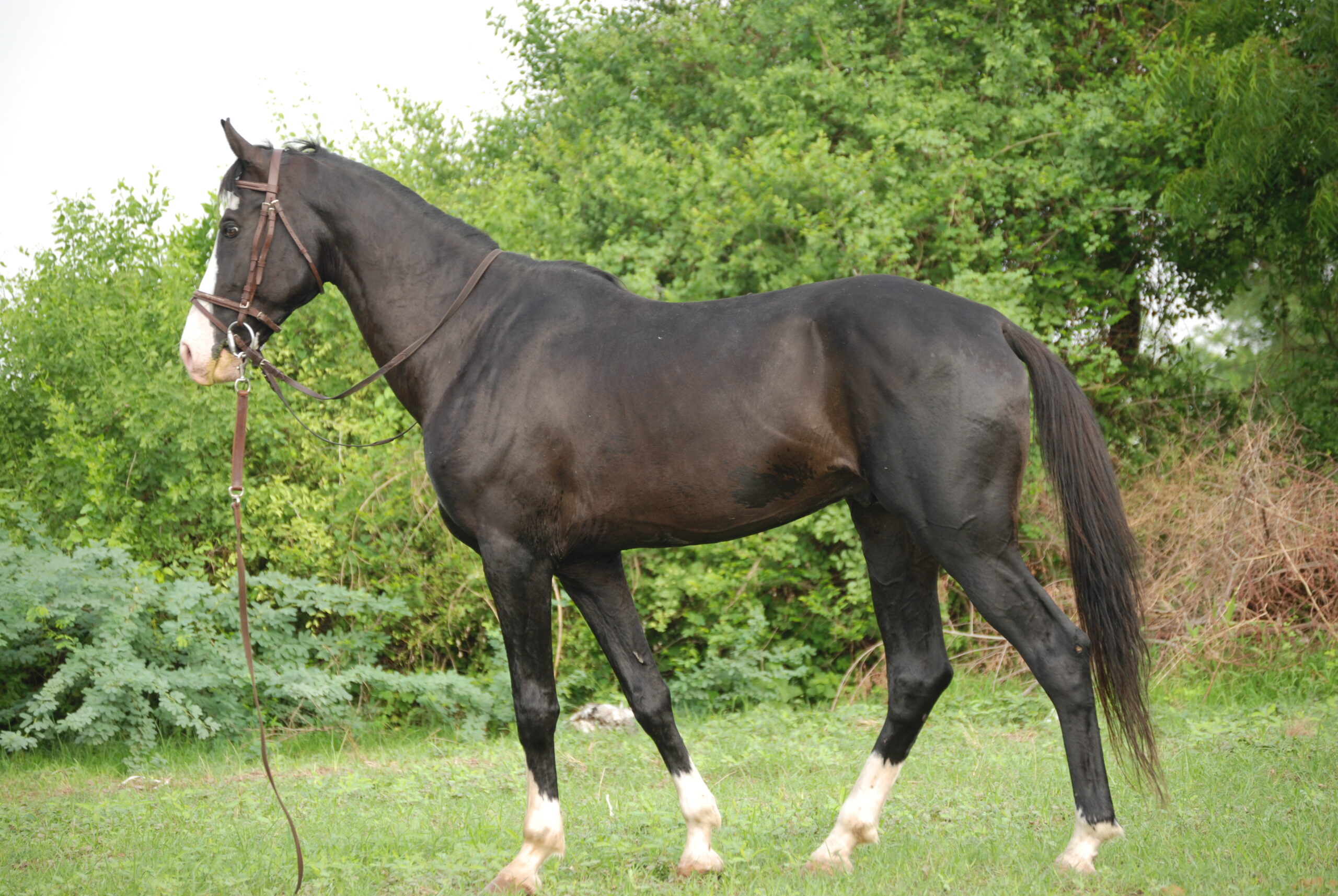
Marwari Horse — Complete Breed Guide: The Royal Warhorse of Rajasthan
The Marwari horse is India’s most magnificent native breed — a horse of extraordinary beauty, legendary courage, and royal heritage that carried Rajput warriors into battle for over eight centuries. With its unmistakable inward-curving ears that meet at the tips, the Marwari is unlike any other horse in the world. Today, with only around 3,000 purebred Marwari horses remaining, this breed stands at a crossroads between glorious history and uncertain future. This complete guide covers everything you need to know about the Marwari horse — its history, characteristics, temperament, care, price in India, and where to find one.
Quick Facts: Marwari Horse at a Glance
| Feature | Details |
|---|---|
| Other names | Malani, Marwadi |
| Origin | Marwar region, Rajasthan, India |
| Height | 14.2–16 hands (58–64 inches) |
| Weight | 320–400 kg (700–880 lbs) |
| Coat colours | All colours — pinto/piebald most prized |
| Lifespan | 25–30 years |
| Gait | Natural ambling gait (revaal) |
| Temperament | Brave, loyal, intelligent, spirited |
| Recognition | Marwari Horse Society of India |
| Conservation status | Rare — approximately 3,000 purebred |
| Price in India | ₹1 lakh – ₹21 crore (champion stallions) |
History and Origin of the Marwari Horse
The story of the Marwari horse is inseparable from the story of Rajasthan itself — a land of desert warriors, royal courts, and battles that shaped Indian history. To understand this breed, you must first understand the people who created it.
The Rathore Dynasty and the Birth of a Breed
The Marwari horse was developed by the Rathore clan — the ruling Rajput warriors of the Marwar region of Rajasthan, the vast desert kingdom centred around modern-day Jodhpur. Beginning in the 12th century, the Rathores began a systematic and disciplined breeding program, crossing indigenous Indian ponies with Arabian horses that arrived through trade routes and conquest. Some historians also point to Mongolian horse influence, reflecting the complex military history of northwestern India.
The name “Marwari” comes from “Marwar” — a Sanskrit-derived word meaning “region of death,” referring to the harsh Thar Desert terrain where the breed was developed. This name is apt — the Marwari was born in one of the harshest environments on earth and evolved to not merely survive but thrive in it.
The Rathore breeding philosophy was simple and rigorous: only horses that combined beauty, endurance, courage, and loyalty would be bred. Weak or cowardly horses were culled without exception. Over centuries, this produced a horse uniquely adapted to desert warfare — compact, heat-tolerant, extraordinarily hardy, and possessed of a fighting spirit that became legendary.
The Marwari as a War Horse
At the height of Rajput power, the Marwari was the most prized cavalry horse in India. Only members of the highest warrior castes were permitted to ride one. These horses carried Rajput warriors through some of the most significant battles in Indian history — including campaigns against the Mughal Empire, where Marwari cavalry units became famous for their ferocity and the near-supernatural loyalty of the horses to their riders.
The Marwari’s most celebrated battlefield characteristic was its refusal to abandon a fallen rider. Trained battle Marwaris were known to stand over wounded soldiers, protecting them from enemy cavalry, and to carry injured riders back to camp without direction. This bond between horse and rider was considered almost sacred by Rajput culture — the Marwari was not merely a war tool but a warrior companion.
The breed was also said to possess exceptional hearing — the inward-curving ears could rotate nearly 180 degrees, detecting approaching enemies before human scouts could. In the silence of the desert at night, a Marwari horse’s ears were considered the camp’s first early warning system.
Near Extinction — The British Era
The Marwari’s darkest period came during the British Raj in the early 20th century. The British colonial administration actively discouraged indigenous horse breeding, preferring imported Thoroughbreds and polo ponies for their cavalry needs. The traditional Rajput warrior culture that had sustained the Marwari breeding tradition was systematically dismantled. The great stud farms of Rajasthan were abandoned or converted. The population of purebred Marwari horses fell catastrophically.
By the time India gained independence in 1947, the Marwari had come perilously close to extinction. The horses that had once numbered in the tens of thousands across Rajasthan had been reduced to a fraction of their former population — scattered across remote stud farms and in the hands of a few dedicated families who had refused to abandon the breed.
Revival and the Marwari Horse Society
The rescue of the Marwari breed began in the 1990s, largely through the efforts of Francesca Kelly, a British horse enthusiast who fell in love with the breed during a visit to Rajasthan. Kelly co-founded the Marwari Horse Society of India and lobbied for years to have export restrictions on the breed relaxed, bringing international attention to the Marwari’s plight. Her work, combined with growing pride among Rajasthani families in their native heritage, sparked a genuine revival.
Today the Marwari Horse Society of India maintains the official breed registry, sets breeding standards, and organises annual shows that celebrate the breed. The government of India has also taken steps to promote and protect the Marwari as a symbol of national heritage. Purebred Marwari horses are now exported — albeit in small numbers — to select buyers in Europe, the United States, and Australia.
Physical Characteristics
The Marwari has a physical appearance that is immediately and unmistakably distinct from every other horse breed in the world.
The Inward-Curving Ears — The Marwari’s Signature
The Marwari’s most iconic feature is its inward-curving ears whose tips curve toward each other and often touch or overlap at the top. No other horse breed in the world shares this distinctive characteristic — it is the Marwari’s absolute visual signature. The ears are not merely decorative. They can rotate nearly 180 degrees, giving the horse extraordinary auditory awareness. In the silence of the desert, this ear structure functioned as a natural amplifier, making the Marwari alert to sounds that other horses would miss entirely.
Head and Face
The Marwari has a refined, elegant head with a straight or slightly convex profile. The eyes are large, expressive, and dark — reflecting the Arabian influence in the breed. The nostrils are large and flexible, an adaptation for breathing in dusty desert conditions.
Body
The Marwari’s body is lean and athletic — medium-sized by horse standards, standing between 14.2 and 16 hands. The neck is arched and well-muscled, the shoulder sloping, the back short and strong. The legs are clean and hard-boned — desert-adapted for traversing rocky and sandy terrain. The overall impression is of a horse that combines elegance with genuine toughness.
Coat and Colours
The Marwari comes in virtually all horse colours. However, pinto and piebald patterns (patches of two colours — typically black/white or chestnut/white) are the most prized and sought-after in Rajasthani horse culture. Grey, bay, chestnut, and black Marwaris are also common. All-white horses are considered auspicious in Rajput tradition and were historically reserved for royalty.
The Revaal Gait
One of the Marwari’s most practical characteristics is its natural ambling gait, known locally as the “revaal.” This smooth, four-beat lateral gait provides an exceptionally comfortable ride for long distances — a crucial advantage for desert cavalry and long-distance travel. Riders can cover many kilometres in the revaal without the jarring impact of a regular trot. This gait is natural in the breed — Marwari foals often show it without any training.
Temperament and Personality
The Marwari’s temperament was shaped by centuries of life alongside human warriors in conditions of extreme hardship and danger. This history produced a horse with a very specific psychological profile.
Loyalty and Bonding
The Marwari is famous for forming extraordinarily deep bonds with its owner or primary handler. This is not a horse that transfers easily between owners — it bonds deeply and specifically. Rajput warriors often spoke of their Marwari horses as partners rather than animals, and historical accounts describe horses that refused to eat after their rider’s death in battle.
Courage
The Marwari is genuinely brave. This is not recklessness — it is a trained, disciplined courage that has been selectively bred for over 800 years. A well-trained Marwari will face loud noises, crowds, fire, and chaotic situations with a calmness that surprises first-time observers. This courage made it an ideal war horse and makes it today an excellent horse for large festivals and processions — including India’s famous wedding processions (baraats) where horses are a central feature.
Intelligence
The Marwari is highly intelligent and learns quickly. It responds exceptionally well to gentle, relationship-based training and very poorly to harsh or forceful methods. The best Marwari trainers use trust and repetition rather than dominance.
Spirit
The Marwari is a spirited horse — not for absolute beginners. It has an energy and alertness that requires an experienced hand. However, this spirit is paired with genuine willingness to work with its rider, making it a rewarding horse for those with the right experience.
The Marwari in Indian Culture
No other horse breed is as deeply embedded in Indian culture as the Marwari. Its presence extends across art, religion, literature, and living tradition.
Wedding Processions
The sight of a beautifully decorated Marwari horse carrying a groom in a baraat (wedding procession) is one of India’s most iconic cultural images. Across Rajasthan, Gujarat, and Haryana, a Marwari horse at a wedding is a statement of status, tradition, and family pride. The horse is adorned with elaborate embroidered coverings, silver jewelry, and colourful decorations — transforming it into a living work of art.
Religious Significance
In Hindu tradition, horses are sacred animals associated with the sun god Surya and with royal power. The Marwari in particular is considered auspicious, and white Marwari horses are used in religious processions and temple festivals across Rajasthan. The ancient Vedic ceremony of Ashvamedha (horse sacrifice) placed the horse at the centre of royal religious power — a tradition the Rajputs maintained symbolically through their reverence for the Marwari.
Polo and Equestrian Sports
The Marwari is used in traditional Indian equestrian sports including tent pegging (a cavalry exercise where riders spear targets at full gallop), dressage, and traditional Rajasthani horse dance performances where highly trained horses perform complex movements to music.
Film and Media
The Marwari’s striking appearance has made it a favourite of Indian filmmakers. It appears in countless Bollywood and regional language films set in historical Rajasthan, and its image is used in tourism campaigns promoting Rajasthan worldwide.
The Marwari Today — Current Uses
The Marwari serves a variety of roles in modern India:
Wedding and ceremonial use — the most common commercial use, with high-quality Marwaris rented or purchased specifically for wedding processions across north and west India.
Equestrian sports — tent pegging, horse shows, and dressage competitions. The Marwari Horse Society of India organises regular shows where breed standards are judged.
Tourism — Rajasthan’s heritage hotels and desert safari operators maintain Marwari horses for tourist rides, giving visitors an authentic royal Rajasthani experience.
Polo — a growing use, as the Marwari’s agility and stamina suit the sport.
Breeding — dedicated stud farms across Rajasthan, Gujarat, and Haryana breed and export purebred Marwari horses both domestically and internationally.
Care and Management
Feed and Nutrition
The Marwari is an “easy keeper” — it evolved in desert conditions on minimal feed and is highly efficient at extracting nutrition from food. This is both an advantage and a risk. In modern conditions with rich pasture or high-concentrate feed, Marwaris are prone to laminitis (hoof inflammation from excess sugar intake) and obesity. A diet of good quality hay, limited grain, and controlled pasture access suits the breed best. Fresh water must always be available.
Exercise
The Marwari needs regular exercise to stay healthy and mentally balanced. A minimum of 1 hour of exercise daily is recommended. The breed’s natural stamina makes it well-suited to long trail rides, but it also benefits from schooling and flatwork that engages its intelligence.
Grooming
The Marwari’s coat is relatively low-maintenance compared to heavier-coated breeds. Regular brushing, mane and tail care, and attention to the distinctive ears (which should be kept clean) are the main requirements. The breed’s desert heritage means it handles heat well but needs shade and fresh water in extreme conditions.
Hooves
The Marwari has naturally hard, compact hooves adapted to desert terrain — a legacy of centuries in the Thar Desert. Regular farrier visits (every 6–8 weeks) are still essential, but the breed’s hooves are generally considered tougher than those of European breeds.
Common Health Issues
- Laminitis — most common in horses with access to rich grazing
- Sand colic — a risk when horses are kept in sandy paddocks and ingest sand while grazing
- Skin conditions — in high-humidity environments, the desert-adapted coat can be prone to fungal skin issues
- Joint issues — in older horses, as with all breeds
Marwari Horse Price in India
The price of a Marwari horse in India varies enormously based on pedigree, age, conformation, and quality of the inward ear curl.
| Quality | Price Range |
|---|---|
| Young horse / basic quality | ₹1 lakh – ₹3 lakh |
| Good quality adult | ₹3 lakh – ₹10 lakh |
| Show quality / perfect ears | ₹10 lakh – ₹50 lakh |
| Champion stallion | ₹50 lakh – ₹21 crore |
The most expensive Marwari on record is “David” — a 72-inch champion stallion from Sanjam Stud Farm, Badal village, Punjab, with an asking price of ₹21 crore. Stud fees for top stallions can reach ₹1.25 lakh per mating.
Average quality Marwaris for ceremonial/wedding use are typically priced at ₹2.5 lakh – ₹3 lakh at horse fairs like the famous Maghi Mela in Muktsar, Punjab.
Where to Find a Marwari Horse in India
Horse fairs and mandis:
- Maghi Mela, Muktsar (Punjab) — one of India’s largest horse fairs, held annually in January. 2,800–3,000 horses from across India.
- Pushkar Camel Fair (Rajasthan) — horses including Marwaris are traded alongside camels.
- Nagaur Cattle Fair (Rajasthan) — significant Marwari horse trading.
Stud farms:
- Jay Stud Farm, Rajasthan — specialises in Marwari breeding
- Halar Stud Farm, Rajkot, Gujarat — breeds both Marwari and Kathiawari
- Horse India, Narlai, Rajasthan — breeding and export
Online platforms:
- IndiaMart — various Marwari breeders listed
Marwari Horse Society of India — for registered purebred horses with verified pedigree
Marwari vs Kathiawari — Understanding the Difference
These two Indian horse breeds are closely related and often confused. Here’s a clear comparison:
| Feature | Marwari | Kathiawari |
|---|---|---|
| Origin | Marwar, Rajasthan | Kathiawar, Gujarat |
| Ear shape | Tips curl inward and meet | Similar but smaller curl |
| Size | Slightly larger | Slightly smaller |
| Colours | All colours — pinto prized | All except black |
| Primary use | Ceremony, shows, cavalry | Police, tent pegging |
| Population | ~3,000 purebred | Very few purebred |
| Recognition | Marwari Horse Society | Kathiawari Horse Breeders’ Assoc. |
Both breeds share Arabian ancestry and are closely related genetically. The Kathiawari is considered slightly hardier and more manageable; the Marwari is more dramatic in appearance and commands higher prices.
Conservation — Why the Marwari Needs Your Support
Despite the revival efforts of the past three decades, the Marwari remains a rare breed under significant pressure:
- Crossbreeding with Thoroughbreds and other foreign breeds for improved racing or polo performance is diluting the pure Marwari gene pool
- Urbanisation of Rajasthan is reducing the land and traditional lifestyle that supported large horse herds
- Economic pressure — maintaining purebred Marwaris is expensive, and many families have sold their breeding stock
- Only ~3,000 purebred Marwari horses remain globally — a critically small number for long-term genetic health
The Marwari Horse Society of India continues to work on preservation, but individual breeders, enthusiasts, and the broader public must support these efforts if the breed is to survive in its pure form.
Frequently Asked Questions About the Marwari Horse
Why do Marwari horses have curved ears? The inward-curving ears are a unique genetic trait developed over centuries of selective breeding by the Rathore clan. The ears can rotate nearly 180 degrees, giving exceptional hearing ability. In battle and in the desert, this made the Marwari an extraordinary early warning system for approaching threats.
Can Marwari horses be exported from India? Yes, but with restrictions. Export of Marwari horses was banned for decades but was relaxed in the early 2000s. A limited number of horses can now be exported with government permission. This has allowed a small global population to develop in Europe, the USA, and Australia.
Are Marwari horses good for beginners? Not recommended for complete beginners. The Marwari is a spirited, intelligent breed that needs an experienced handler. With the right training and rider, however, it is exceptionally rewarding. Its natural ambling gait (revaal) makes it very comfortable to ride once a bond is established.
What is the rarest colour in Marwari horses? Pure white Marwari horses are considered the rarest and most auspicious. In Rajput tradition, a white Marwari was a horse of royalty — only kings could ride them. Today, white or cremello Marwaris command the highest prices at shows and fairs.
How many Marwari horses are left in the world? Approximately 3,000 purebred Marwari horses remain globally, with the vast majority in India. This makes them one of the rarest horse breeds in the world.
What is the Marwari horse’s natural gait called? The natural four-beat ambling gait of the Marwari is called the “revaal.” It is exceptionally smooth and comfortable for long-distance riding — a key characteristic that made it valued for desert travel and cavalry campaigns.
Conclusion — A Royal Breed That Must Survive
The Marwari horse is one of humanity’s great living treasures — a horse that carried the history of an entire civilisation on its back for eight centuries, came perilously close to extinction, and is now fighting its way back to prominence. Its inward-curving ears, its revaal gait, its legendary loyalty, and its breathtaking beauty make it unlike any other horse in the world.
India’s duty to this breed is clear — to document it, celebrate it, breed it with care, and ensure that future generations can see a Marwari horse in its full glory. NativeBreed.org exists precisely for this purpose — to make sure that breeds like the Marwari are never forgotten.
If you own a Marwari horse, breed Marwaris, or have personal experience with this magnificent breed — share your story in the comments below. Every piece of knowledge about India’s royal horse matters.
Related breeds you might be interested in:
- Kathiawari horse — Gujarat’s closely related native breed
- Manipuri Pony — The ancient polo pony of Northeast India
- Spiti horse — The hardy Himalayan mountain horse
- Zanskari horse — Ladakh’s endangered high-altitude breed