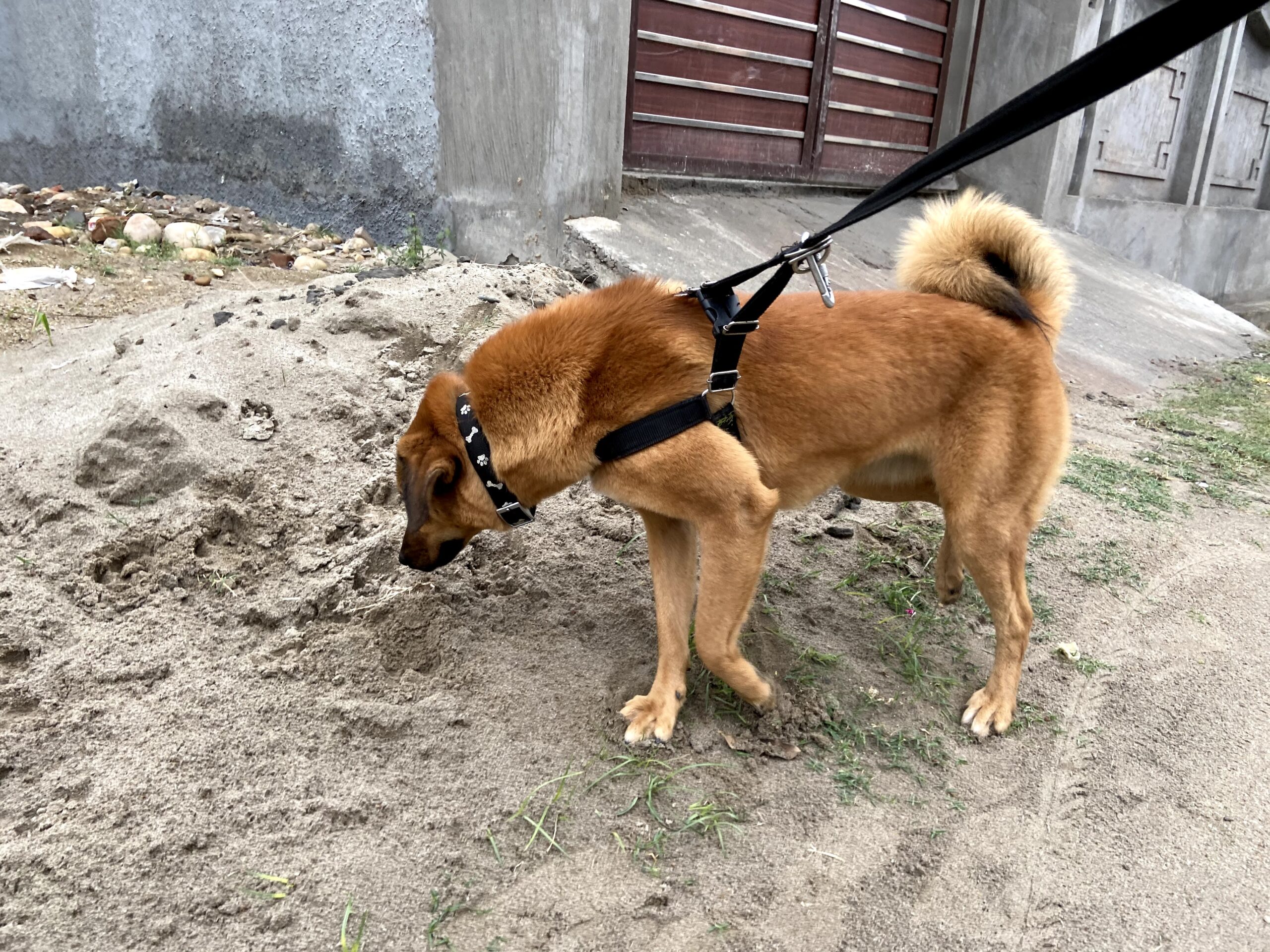
Bakharwal Dog — Complete Breed Guide: The Ancient Guardian of the Himalayas
The Bakharwal dog is one of India’s oldest and most remarkable native breeds — a massive, fearless livestock guardian that has protected nomadic tribes in the Himalayan mountains for centuries. Yet despite its incredible history and unique characteristics, this breed remains virtually unknown outside its homeland. In this complete guide, we cover everything you need to know about the Bakharwal dog — its history, temperament, care, conservation status, and where to find one in India.
Quick Facts: Bakharwal Dog at a Glance
| Feature | Details |
|---|---|
| Other names | Bakharwal Mastiff, Kashmiri Sheepdog, Kashmiri Mastiff, Gujjar Watchdog, Bakarwali Shepherd Dog |
| Origin | Jammu & Kashmir, Ladakh, Himachal Pradesh, India |
| Height | Male: 25–30 inches / Female: 23–28 inches |
| Weight | 70–90 kg (150–200 lbs) |
| Coat | Thick double coat — long outer coat |
| Colors | Black & tan, piebald, tri-colour — never pure white or orange |
| Lifespan | 10–12 years |
| Temperament | Protective, loyal, alert, independent, gentle with family |
| Recognition | Not recognised by any major kennel club |
| Conservation status | Near threatened — population declining |
| Price in India | ₹2,000 – ₹6,000 |
History and Origin of the Bakharwal Dog
The Bakharwal dog is an ancient breed from the Pir Panjal mountain range of the Himalayas, bred for centuries by the Gujjar and Bakarwal nomadic tribes of Jammu & Kashmir and Himachal Pradesh. These semi-nomadic communities migrated seasonally between the high mountain pastures and the valleys below, and the Bakharwal dog was their constant companion — guarding their flocks of sheep, goats, and cattle from wolves, snow leopards, and bears.
The exact origin of the breed is debated among historians and dog experts. The most widely accepted theory is that the Bakharwal descended from the Tibetan Mastiff brought to the region through ancient trade routes along the Silk Road. Some scholars believe the breed may be a cross between a Molosser sheepdog and a wolf, pointing to the breed’s incredible fearlessness and unique vocalisation abilities. Yet others argue the Bakharwal is among the oldest Indian dog breeds — predating even the Tibetan Mastiff’s arrival in the region — and that the Bakharwal, Gaddi Kutta, and Bhotia are all regional varieties of the same ancient Himalayan livestock guardian.
The breed name itself comes from the Bakarwal community — nomadic pastoralists who have been the breed’s primary keepers and breeders for generations. The word “Bakarwal” in Gojri (the language of the Gujjar tribe) roughly means “goat herder.” These communities bred the dog not as a pet but as a working partner, selecting for courage, stamina, loyalty, and the ability to survive in extreme mountain conditions.
Two Strains of Bakharwal
There are two recognised regional strains:
1. Simple Bakharwal — the more common strain found across Jammu & Kashmir and Himachal Pradesh, used primarily as a livestock guardian.
2. Ladakhi Bakharwal — found in the high-altitude Ladakh region. This strain has a unique ability called “hk-saya” or “yak-saya” — continuous open-mouth barking for extended periods without pausing for breath. This trait was specifically valued for alerting nomadic camps to approaching predators or threats in the darkness of mountain nights.
Physical Characteristics
The Bakharwal is a large, powerful, and heavily built dog that commands immediate attention. It is built for endurance in harsh mountain terrain rather than speed.
Size and Build
The Bakharwal is a massive dog — males typically stand 25 to 30 inches at the shoulder and weigh between 70 and 90 kilograms. The body is deep-chested with a straight back, broad shoulders, and long, powerful legs. The overall impression is of a dog that combines strength with agility — capable of traversing rocky Himalayan terrain for hours without tiring.
Head and Face
The head is large and broad with a powerful muzzle. The eyes are round and bright, giving the dog an alert, intelligent expression. The ears hang down on either side of the face and are moderately sized. The neck is strong and muscular — essential for the physical confrontations with large predators that this breed regularly faced in its working life.
Coat
The Bakharwal’s most striking feature is its thick double coat. The outer coat is long and can be wavy or straight, providing excellent insulation against the freezing Himalayan winters where temperatures regularly drop below -20°C. The undercoat is dense and soft. This coat requires regular grooming as it sheds heavily, particularly during seasonal changes.
Colour
Bakharwal dogs come in a variety of colours including black and tan, piebald (patches of two colours), tri-colour (black, white, and tan), and solid brown or black. Pure white and orange are not considered authentic Bakharwal colours.
Tail
The tail is bushy and well-feathered, carried high or curved over the back when the dog is alert or active.
Temperament and Personality
The Bakharwal’s temperament is shaped entirely by thousands of years of working life in the mountains. Understanding this background is essential before considering one as a pet.
With Family
Within its own family unit, the Bakharwal is gentle, loving, and deeply devoted. It forms powerful bonds with the people it considers “its own” and is known for being patient and protective with children it has grown up with. The breed’s centuries of guarding nomadic family settlements — not just livestock — means it has a natural instinct to protect the people and territory it calls home.
With Strangers
The Bakharwal is deeply suspicious of strangers and will not warm to unfamiliar people easily. This wariness is a working instinct — in the mountains, a stranger approaching a nomadic camp was always treated with caution. Early and extensive socialisation from puppyhood is essential to prevent this natural suspicion from becoming problematic aggression.
With Other Animals
The Bakharwal has historically worked alongside other dogs in packs. When raised together from puppyhood, they can co-exist with other dogs. However, adult Bakharwals introduced to unfamiliar dogs may be dominant and territorial. Towards the livestock they are raised with — sheep, goats, cattle — they are extraordinarily protective and gentle.
Courage and Guardian Instinct
Perhaps the Bakharwal’s most remarkable characteristic is its fearlessness. This is a dog that has historically been expected to confront wolves, snow leopards, and bears to protect its flock — and has done so successfully. Stories from the Gujjar community tell of single Bakharwal dogs driving away full-grown leopards from goat herds. This courage is not aggression — it is a calm, determined protectiveness that activates only when a real threat is perceived.
Independence
The Bakharwal is an independent thinker. It was bred to make decisions on its own — out in the mountains at night, far from human supervision. This means it does not respond well to rigid obedience training and can be challenging for inexperienced dog owners. It does not perform tricks and does not respond to repetitive commands. What it does respond to is trust, consistency, and a clear understanding of its role within the family.
The Vegetarian Bakharwal — A Unique Characteristic
One of the most fascinating and unique facts about the Bakharwal dog is that it is primarily vegetarian. Unlike almost every other working dog breed in the world, the Bakharwal has traditionally been fed a diet of milk, butter, bread, and rice by the Gujjar and Bakarwal communities. Meat was rarely available in nomadic pastoral life, and the dog adapted over centuries to thrive on a plant-based diet supplemented by dairy products.
This is not a limitation — it is an extraordinary evolutionary adaptation. The Bakharwal’s digestive system has been shaped over centuries to extract maximum nutrition from a non-meat diet, while still maintaining the muscle mass and energy required to be an effective large predator guardian. This characteristic makes the Bakharwal truly unique among large working dog breeds worldwide.
Bakharwal Dog and the Indian Police
In recent years, the Bakharwal dog has attracted significant attention from Indian security forces. The breed’s combination of fearlessness, stamina, scenting ability, and deep loyalty has made it an excellent candidate for police and military work in mountainous terrain. The Indian Police Service has used Bakharwal dogs to track militants across difficult mountain terrain in Jammu & Kashmir — terrain that is extremely challenging for conventional police dog breeds like German Shepherds and Belgian Malinois.
This is a remarkable development for the breed — recognition from India’s security establishment of the Bakharwal’s unique working abilities in its native environment.
Conservation Status — A Breed Under Threat
The Bakharwal dog is facing a serious population crisis. Multiple studies in recent years have warned that the breed is on the verge of extinction. The reasons are complex and deeply tied to the changing way of life in the Himalayan region:
- Declining nomadic lifestyle — As the Gujjar and Bakarwal communities transition from nomadic pastoralism to settled life, the need for large livestock guardian dogs has declined sharply.
- Crossbreeding — The introduction of foreign dog breeds to the region has led to widespread crossbreeding, diluting the pure Bakharwal gene pool.
- Militancy and conflict — In areas affected by conflict in Jammu & Kashmir, Bakharwal dogs have been shot by militants or contracted rabies, reducing the already small population further.
- No formal recognition — The breed is not recognised by the Kennel Club of India or any international kennel club, meaning there is no formal breeding program or studbook to protect genetic diversity.
The Bakarwal community has appealed to the Indian government to include the Bakharwal dog in an endangered species protection category. Conservation efforts are underway but remain insufficient given the scale of the threat.
Care and Health
Exercise
The Bakharwal needs significant daily exercise — it is a working mountain dog built for covering large distances. A minimum of 1–2 hours of vigorous exercise daily is required. It is not suited to apartment life and needs a large property with a secure, high fence. In its natural environment this dog would cover 10–15 km daily across mountain terrain.
Grooming
The thick double coat requires brushing at least 2–3 times per week to prevent matting and reduce shedding. During the twice-yearly heavy shedding seasons (spring and autumn), daily brushing is necessary. The coat does not need to be trimmed — it is a functional, protective coat that should be kept in its natural state.
Diet
Traditionally fed a vegetarian diet, the Bakharwal can thrive on high-quality vegetarian food supplemented with dairy products. Modern owners can feed a combination of chapatti, rice, vegetables, and good quality milk or yoghurt, supplemented with a protein source appropriate to the dog’s activity level. Commercial dog food can be used but should be of high quality.
Common Health Issues
As a hardy mountain breed with centuries of natural selection, the Bakharwal is generally robust. However, like all large breeds, it is susceptible to:
- Hip dysplasia — common in large working breeds
- Bloat (gastric torsion) — a potentially life-threatening condition in deep-chested dogs
- Obesity — if exercise is insufficient
- Patellar luxation — occasional in this breed
Regular veterinary checkups, appropriate exercise, and a balanced diet prevent most of these issues.
Climate
The Bakharwal is bred for extreme cold and is not well-suited to hot climates. In the plains of India or in hot regions, it will struggle significantly during summer months and requires air-conditioned environments and careful management during hot weather.
Is the Bakharwal Dog Right for You?
The Bakharwal is not a dog for everyone. It is a specialist working breed with very specific needs. Consider this honestly before deciding:
The Bakharwal IS right for you if:
- You have a large property with secure fencing
- You have experience with large, independent dog breeds
- You want a deeply loyal and protective family guardian
- You can provide 1–2 hours of vigorous exercise daily
- You live in a cool or cold climate
- You are patient with a dog that doesn’t perform tricks or obey commands instantly
The Bakharwal is NOT right for you if:
- You live in an apartment or small house
- You want a dog that is immediately friendly with strangers
- You are a first-time dog owner
- You live in a hot climate without good air conditioning
- You want an easily trainable dog
Where to Find a Bakharwal Dog in India
Finding a purebred Bakharwal dog is genuinely difficult. The breed is primarily with the Gujjar and Bakarwal communities in Jammu & Kashmir, Ladakh, and Himachal Pradesh. There are very few formal breeders.
Approximate price: ₹2,000 – ₹6,000 for a puppy from a working breeder in Kashmir or Himachal Pradesh.
The best approach is to contact:
- Local contacts within the Gujjar/Bakarwal community in J&K
- Dog enthusiast groups in Jammu and Kashmir
- The Kennel Club of India for any registered breeders
Annual cost of ownership (food, veterinary care, activities) is estimated at ₹33,000 – ₹42,000 per year.
Bakharwal Dog vs Other Indian Breeds
| Feature | Bakharwal | Rajapalayam | Mudhol Hound | Gaddi Kutta |
|---|---|---|---|---|
| Size | Very large | Large | Medium | Large |
| Origin | Kashmir | Tamil Nadu | Karnataka/Maharashtra | Himachal Pradesh |
| Purpose | Livestock guardian | Hunting | Hunting | Livestock guardian |
| Temperament | Independent, protective | Loyal, one-person | Athletic, gentle | Similar to Bakharwal |
| Best for | Cold climates, large properties | Warm climates, experienced owners | Active families | Mountain regions |
Frequently Asked Questions About the Bakharwal Dog
Is the Bakharwal dog dangerous? The Bakharwal is not dangerous with proper socialisation and responsible ownership. It is a natural guardian that is suspicious of strangers but gentle with its own family. Unsocialised Bakharwals or those kept in inappropriate conditions can become problematic.
Can the Bakharwal dog survive in hot climates like Chennai or Mumbai? It is not recommended. The Bakharwal is adapted to cold Himalayan conditions and will struggle significantly in hot, humid climates. If kept in such conditions, air conditioning, careful management, and avoidance of outdoor activity during hot hours is essential.
Is the Bakharwal dog recognised by the Kennel Club of India? No. The Bakharwal is not currently recognised by any major kennel club including the KCI. This is a significant gap that conservation advocates are working to address.
What does the Bakharwal dog eat? Traditionally a primarily vegetarian diet — milk, butter, bread, and rice. Modern diets can include high-quality vegetarian dog food, dairy supplements, and moderate protein. Consult a veterinarian familiar with large working breeds for specific dietary guidance.
How long do Bakharwal dogs live? The average lifespan is 10–12 years, typical for a large working breed.
How many Bakharwal dogs are left? An exact population count does not exist, but multiple studies indicate the pure Bakharwal population is critically small and declining. Formal conservation intervention is urgently needed.
Conclusion — Protecting India’s Himalayan Guardian
The Bakharwal dog is a living piece of Himalayan history — an ancient breed that has guarded nomadic communities and their livestock across some of the world’s most challenging terrain for thousands of years. Its courage, loyalty, and unique characteristics (including its vegetarian diet) make it one of India’s most extraordinary native breeds.
Yet this remarkable dog is disappearing. The decline of the nomadic lifestyle that created and sustained the breed, combined with crossbreeding, conflict, and lack of formal recognition, is pushing the Bakharwal toward extinction. Documenting, celebrating, and actively supporting the conservation of breeds like the Bakharwal is exactly why NativeBreed.org exists.
If you have personal experience with the Bakharwal dog — whether as an owner, a member of the Gujjar or Bakarwal community, or a conservationist — share your story in the comments below. Every piece of knowledge about this magnificent breed matters.
Related breeds you might be interested in:
- Gaddi Kutta — Another Himalayan livestock guardian from Himachal Pradesh
- Himalayan Sheepdog — High-altitude guardian from Nepal and northern India
- Rajapalayam — The ancient sighthound of Tamil Nadu
- Mudhol Hound — The elegant hunting dog of Karnataka